Road Cutting Machines: The Ultimate Guide to Types, Specifications, and Selection
Road cutting machines, also known as concrete saws or road saws, are essential equipment in modern construction and infrastructure maintenance. They are engineered for precision cutting of asphalt, concrete, and other rigid surfaces, playing a critical role in tasks like joint creation, trenching for utilities, road repair, and controlled demolition. This comprehensive guide delves into the main types of road cutters, their technical specifications, operational advantages, and ideal applications to assist professionals in selecting the optimal equipment for their projects.
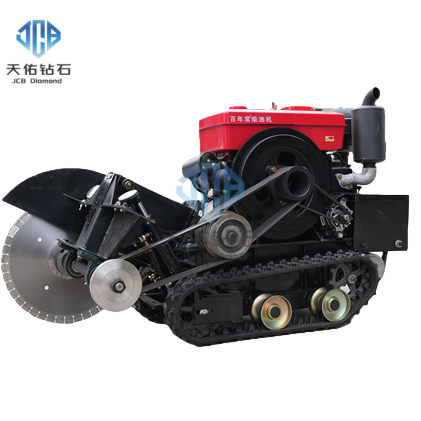
1. Track-Mounted Diesel Road Cutter: The Heavy-Duty Solution for Large-Scale Projects
For the most demanding and large-scale cutting jobs, the track-mounted road cutterstands as the premier solution. This robust, remotely controlled machine combines immense power with exceptional stability, making it indispensable for continuous, deep-cut applications on airport runways, highways, and major industrial sites.
Key Features and Benefits:
Enhanced Remote Operation: Operators can control the machine from a safe distance, which is crucial in high-noise, high-debris environments. This significantly improves workplace safety.
Superior Traction and Stability: The rubber tracks provide excellent grip and a stable platform on uneven terrain, preventing slippage to ensure straight, precise cuts. A built-in travel lock adds a vital safety feature against unintended movement.
High-Power Diesel Engine: Typically equipped with a water-cooled diesel engine (e.g., 35 HP), it delivers consistent, reliable power for the most heavy-duty cutting tasks.
Maximum Cutting Depth: Capable of handling large-diameter blades (up to 1.2 meters) to achieve a maximum cutting depth of 50 cm, perfect for deep trenching.
Technical Specifications:
Approximate Weight: 650 kg
Engine Power: 35 HP Diesel
Maximum Cutting Depth: 500 mm
Operation: Remote Control
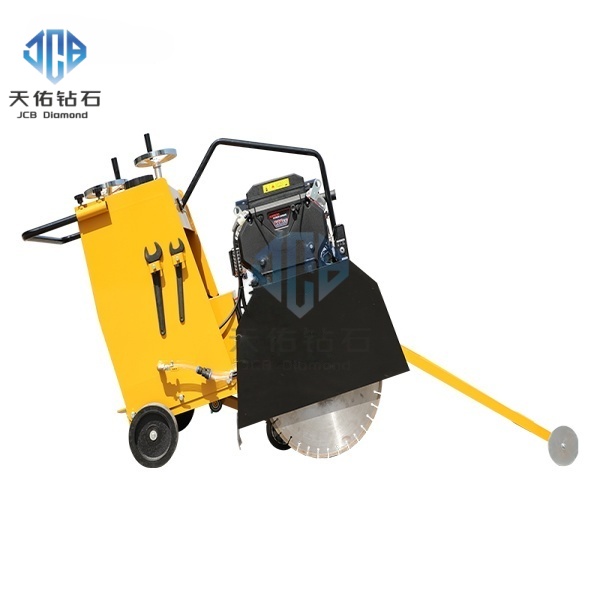
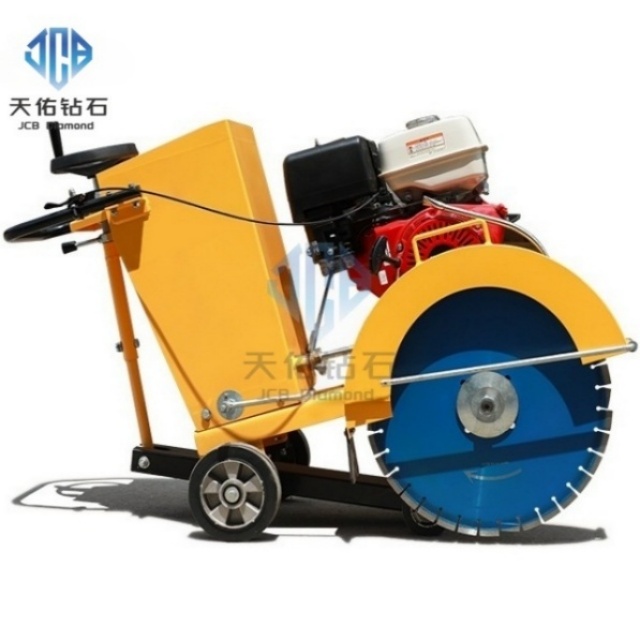
2. Walk-Behind Gasoline Cutter: The Versatile Workhorse for Everyday Jobs
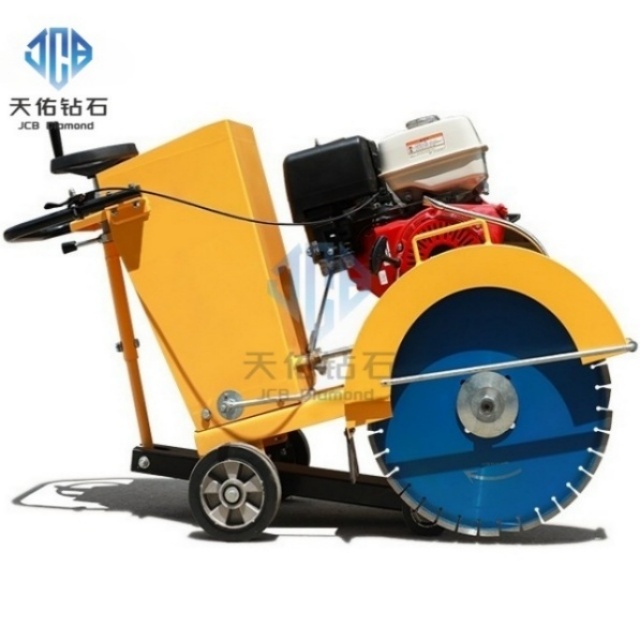
The walk-behind road cutteris the most common and versatile type, serving as the go-to choice for a wide range of municipal, utility, and general construction projects. Its ideal balance of power, maneuverability, and ease of use makes it a favorite among contractors.
Key Features and Benefits:
Reliable Power Options: Often powered by renowned gasoline engines like Honda or Loncin, known for their easy starting, reliability, and strong performance.
Compact and Mobile: Its walk-behind design and manageable weight (typically 120-135 kg) make it easy to transport and operate in confined spaces where larger machines cannot reach.
Efficient Dust Suppression: An integrated water spray system controls hazardous dust, cools the diamond blade and extends its lifespan.
Adjustable Cutting Depth: Mechanical or hydraulic systems allow for precise depth control, suitable for various tasks from shallow grooving to deeper cuts.
Technical Specifications (Typical Models like JCB-500):
Models: JCB-400, JCB-500, Large-Diameter (600/700mm blade)
Engine Power: 9 HP - 18 HP (Gasoline)
Blade Diameter: 400 mm - 700 mm
Max. Cutting Depth: 150 mm - 260 mm
Weight: 120 kg - 135 kg
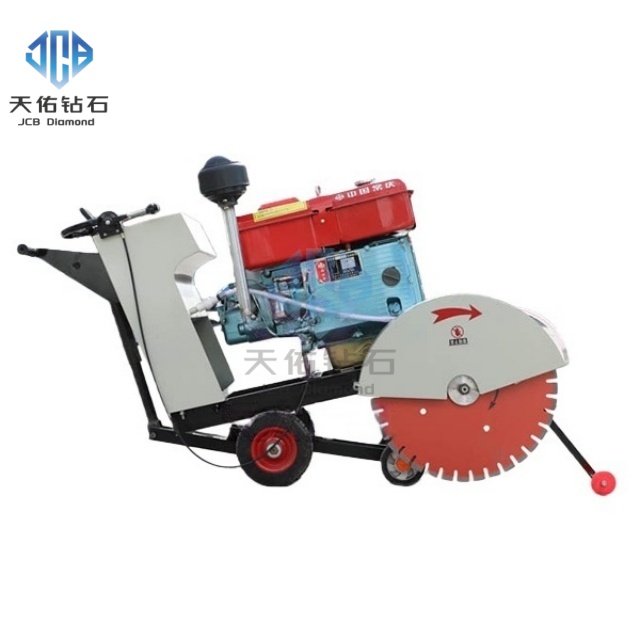
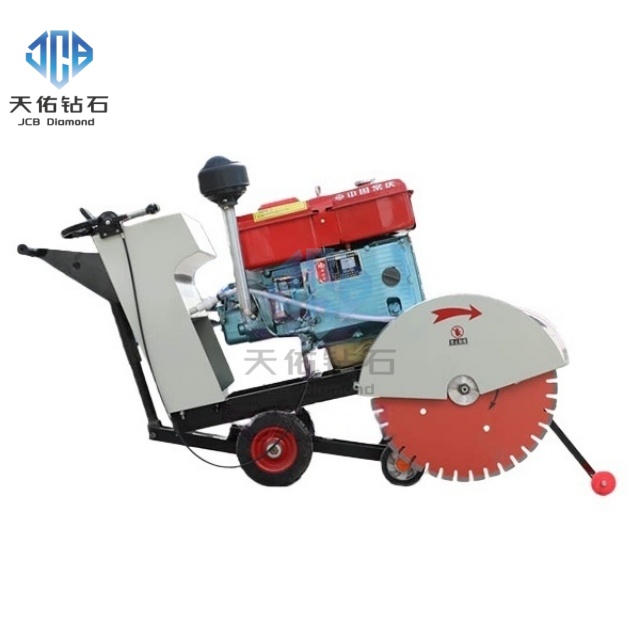
3. Walk-Behind Water-Cooled Diesel Cutter: The Efficient Performer for Prolonged Use
Bridging the gap between heavy-duty track-mounted machines and standard walk-behind units, this model offers the durability and efficiency of a diesel engine in a compact, walk-behind format. It is optimized for prolonged, intensive cutting work where gasoline models might be less fuel-efficient.
Key Features and Benefits:
Diesel Efficiency and Torque: A water-cooled diesel engine (e.g., 15 HP) provides excellent fuel economy and high torque, ideal for sustained performance under heavy load.
Multi-Purpose Functionality: Designed with a spindle suitable for both grooving and full-depth cutting, increasing its utility on a single job site.
Reduced Vibration for Cleaner Cuts: A robust and heavy frame minimizes vibration, which contributes to cleaner cuts, better blade life, and reduced operator fatigue.
Optimized for Significant Depths: Engineered to achieve substantial cutting depths (e.g., 200mm) while maintaining excellent stability.
Technical Specifications (Example Model JCB-600):
How to Choose the Right Road Cutting Machine: A Detailed Guide
Selecting the correct machine is crucial for project efficiency and cost-effectiveness. Consider the following factors beyond the basic types:
Project Scale and Cutting Depth: For deep cuts (300-500mm) on large projects like highways, a Track-Mounted Diesel Cutteris unmatched. For general utility work and patch repairs with moderate depth requirements, a Walk-Behind Gasoline Cutteroffers the best mobility.
Power Source and Fuel Efficiency: For long-duration tasks where fuel efficiency and high torque are critical, a Walk-Behind Diesel Cutteris superior. For intermittent use and easy maintenance, gasoline engines are often preferred.
Maneuverability and Site Conditions: Evaluate the workspace. Compact, walk-behind models are essential for tight urban environments or indoor sites (with proper ventilation), whereas open areas can accommodate track-mounted machines.
Blade Specifications: The blade diameter directly determines maximum cutting depth. Also, ensure you use the correct type of diamond blade (e.g., for asphalt or reinforced concrete) for the material being cut.
Operator Safety and Comfort: Features like remote control, anti-vibration systems, and effective dust suppression are not just luxuries; they are critical investments in operator safety and productivity.
Beyond Selection: Maintenance Tips for Longevity
To ensure your road cutting machine operates reliably for years, regular maintenance is key. This includes checking and changing the engine oil, cleaning or replacing air filters, inspecting the blade for damage or wear, and ensuring the dust suppression system is functioning correctly. Always refer to the manufacturer's manual for specific maintenance schedules.
Conclusion
Understanding the distinct advantages of track-mounted, walk-behind gasoline, and walk-behind diesel road cutters empowers professionals to make informed decisions. By carefully assessing your project's requirements in terms of depth, duration, and site conditions, you can select the ideal machine to maximize productivity, ensure safety, and achieve the highest quality of work.